



Online Directories for Performing Arts
Google and other search engines are building proprietary knowledge graphs from the data they scrape from websites and open databases on the internet. Their knowledge graphs lie at the heart of the search results they show users. In addition to crawling websites, search engines, like Google, use an array of open data sources they trust to aggregate more powerful information to respond to user searches with the best answer.
There are many online directories that seek to consolidate important information about the arts and culture sector in the digital world. The most important ones in the performing arts at the time of this writing are:
By having as complete a record as possible about performers, companies, presenters and venues, and recurring performing arts events, like festivals, the sector and its activities will become more discoverable: Search engines like Google draw on these open sources to display answers to web user searches. Google also includes information from these reputable sources and its Google MyBusiness tool in its knowledge panels.
One-off events are not well suited to be listed in Wikidata; rather it is an excellent directory for enduring facts, e.g. venues, organizations, recurring festivals and events.
A note on Wikipedia: Wikipedia operates as a crowdsourced encyclopedia. It’s publishing policies make it more difficult to update listings about one’s own organization or about oneself. However, Wikipedia uses information from Wikidata and Wikimedia Commons to help populate its listings.
View or download the complete PDF file here.
When original music is used in a performance, creating a record of that piece in the related music directories is useful to the composer and performers as well as the performance piece.
Artsdata.ca
This Canadian data initiative, led by Montreal’s Culture Creates, aims to “empower the Canadian arts sector to actively promote a fairer and more equitable digital ecosystem. This initiative is building a linked open data knowledge graph of the arts that is open, accessible to all, and community-sourced.” It seeks to develop a valuable resource by and for the arts sector using the schema.org standards.
Artsdata.ca is actively growing its user base. The pre-requisite is that your website has structured its data appropriately, using schema.org mark up standards. Then artsdata.ca simply need to be informed to include your website in its ongoing web crawling and scraping cycle.
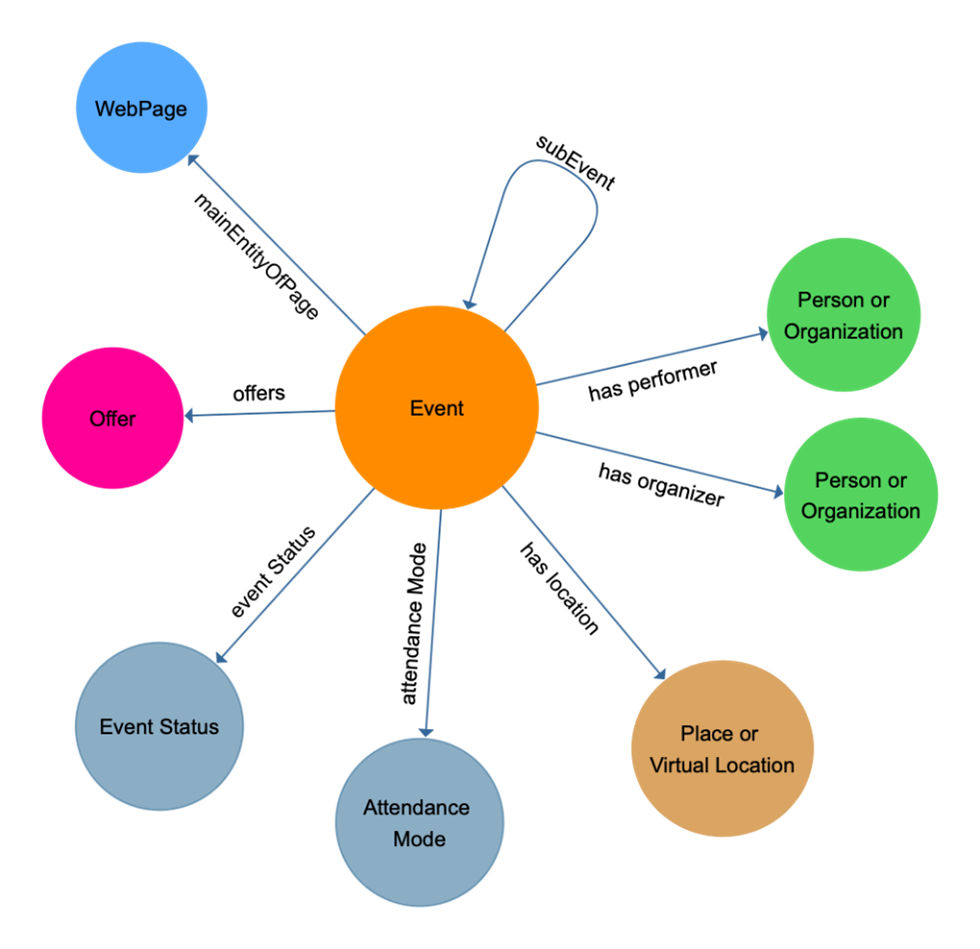
Its focus is on performing arts events at this stage of development. This graphic shows the main classes used in Artsdata.ca as of June 2021.
According to artsdata.ca: “The classes and properties used in Artsdata represent a “thin” layer of data roughly specified by Google Event Structured Data. The main difference is that Artsdata enforces links between entities within Artsdata and interlinks URIs outside of Artsdata including links to Wikidata and Linked Open Data sources. Artsdata also generates unique global identifiers (IRIs also called URIs) for classes such as Event, Person, Place, and Organization.” The full data model is available here: https://culturecreates.github.io/artsdata-data-model/ .
Any arts organization can use the Contact Us link on Artsdata.ca or you can send an email directly to [email protected] with subject line: Artsdata.ca participation.
Wikidata
Wikidata is the preferred knowledge base for search/answer algorithms and AI-powered tools such as personal virtual assistants because they need access to an unlimited supply of simple and highly structured information. Google relies on many open knowledge bases and content repositories, like the Wikimedia projects, to generate rich results and to populate knowledge cards. Wikimedia projects are by no means the only sources of information and content for Google. But they are accessible, easy and powerful platforms for anyone wishing to participate in them. Google:
- Displays a short summary from Wikipedia
- Pulls basic factual information from Wikidata
- Retrieves photos from Wikimedia Commons
Wikidata entries provide factual and verifiable facts in the form of Items and Statements (characteristics) related to people, organizations and things. It is multi-lingual and collects unique identifiers from numerous databases including those referenced below.
Wikidata is comprised of basic building blocks:
- Item or entity (anyone can create) that are assigned a unique ID
- Property (restricted by a collaborative process)
- g. Nutcracker composer Tchaikovsky
- Value
- Tchaikovsky (an item) is the value
- Values can also be numbers: date, geo coordinates, link to an image in Wikimedia commons
- Statement: Item + property + value
This table shows the way different tools refer to these items and their plain language translation:
| Knowledge Representation Framework | Referent Entity | Attribute/link | Value |
| Resource Description Framework (RDF) | Subject | Predicate | Object |
| Wikidata statement | Item | Property | Value |
| Plain language | Thing | Relationship | Thing |
| Users | Any individual, search engines and other tools that use linked open data |
| Purpose | A free and open knowledge base that can be read and edited by both humans and machines. Wikidata acts as central storage for the structured data of its Wikimedia sister projects including Wikipedia, Wikivoyage, Wiktionary, Wikisource, and other, as well as many other services, including search engines like Google. |
| Are you or your organization, venue listed | Search at http://www.wikidata.org |
| How to get in? | Anyone can register for a free account and join this crowdsourcing platform as a contributor and editor. |